Is It Worth It To Start A Marketing Agency in 2026
business personal growth stories
Five years ago, I never imagined I’d own a successful business. It was a dream—something I aspired to—but making it real felt like a long shot.
Today, I run Right Rudder Marketing, a marketing agency focused on the aviation industry. We’re not some multimillion-dollar giant, but we’ve hit half a million in annual revenue with a 35%+ profit margin (EBITDA) and are on track to break a million next year.
It hasn’t been easy. Even now, we face big challenges to keep growing and stay in business. I’m part of forums and masterminds where I see tons of folks itching to jump into the marketing space. To them, I say: go for it. I believe in an abundance mindset—there’s room for everyone. But let’s talk real about the struggles I faced building Right Rudder and the hurdles we’re tackling now. Hopefully, this helps answer the big question: Is starting a marketing agency worth it?
Outline and Summary
Phase 1: Start-Up Phase – How I launched Right Rudder Marketing
Getting Your First Customers – Tips for landing your first clients
Phase 2: Scaling – Challenges we’re facing as we grow Right Rudder
Finding the Right People – My ongoing quest for rockstar talent
Phase 3: Significance – Where I see Right Rudder going in the future
Was It Worth It? – My take on whether starting a marketing agency is worth the grind
Phase 1: Start-Up Phase
This is the most exciting part of the journey. You’ve got a killer idea, a fire to start a business, and a dream to make a big impact while earning a living.
For marketing agencies, startup costs are dirt cheap. For me, it was just a company email, a PO box, government registration, and a business bank account—totaling under $100.
Here’s the big takeaway: open a bank account. A business isn’t about the product or the customers, as much as we’d like to think it is. As entrepreneurs, it’s easy to get caught up in how awesome our service is or to believe everyone will line up to throw cash at us. Nope. At its core, a business is a vehicle to deliver a product or service to a customer in exchange for revenue.
That’s why the number one focus in the start up phase is cash flow. No cash flow, no business. In aviation terms, a flight school with a hangar full of planes but no students isn’t a business. Instead, it’s an aircraft collection. You need revenue to survive, which means getting your first customers. To do that, set up a bank account and register with platforms like Stripe or Square to accept payments fast.
Getting Your First Customers
Before you start a marketing agency, figure out who your ideal customer is. Who can benefit most from your services? Who do you enjoy talking to every day? What industries or topics do you know or care about? This matters because, as a marketing agency owner, you need to speak to the hearts and minds of your customers. If you don’t know their world or have no connections in their industry, it’s gonna be tough.
The marketing space is somewhat saturated right now at least in my opinion. Low startup costs are great for newbies, but they also lead to commoditization and individuals pitching the lowest costs.
Everyone and their dog seems to be starting an agency. To make a profitable business, specialize. Pick a niche—whether it’s website development, graphic design, paid ads, or full-service marketing for a specific industry like aviation, which is what Right Rudder does. Specialization helps in two ways:
- You speak your customers’ language, which builds trust.
- You don’t have to reinvent the wheel for every client. You create a proven system with reusable assets like stock imagery, copywriting templates, and content ideas ready to go.
- You become more of a consultant and less of a commodity.
Closing Your First Sale
There are lots of ways to land your first client. I’ll share what I was taught and what actually happened in real life.
The advice I got was to start with a conversation. Tap your immediate network to find someone in your target market. The goal isn’t to pitch right away but to listen. Learn about their industry and challenges.
Ask yourself: can my marketing skills actually help them? If the answer’s yes, mention you’re starting an agency and testing the waters. Ask if they know anyone who might need marketing help. From there, you can offer your services. If you’re brand new with no track record, consider doing the work for free or at a steep discount.
The goal isn’t to get rich quick—it’s to land that first client and knock their socks off. Go all in, deliver amazing results, and build a case study. Track where they started, where they ended up, and what you did to get them there.
After 3–6 months, ask for a video testimonial. Use that testimonial and case study to pitch your next client. Keep this up, and you’ll build a library of proof that snowballs into more clients. As you grow, charge higher rates to boost revenue.
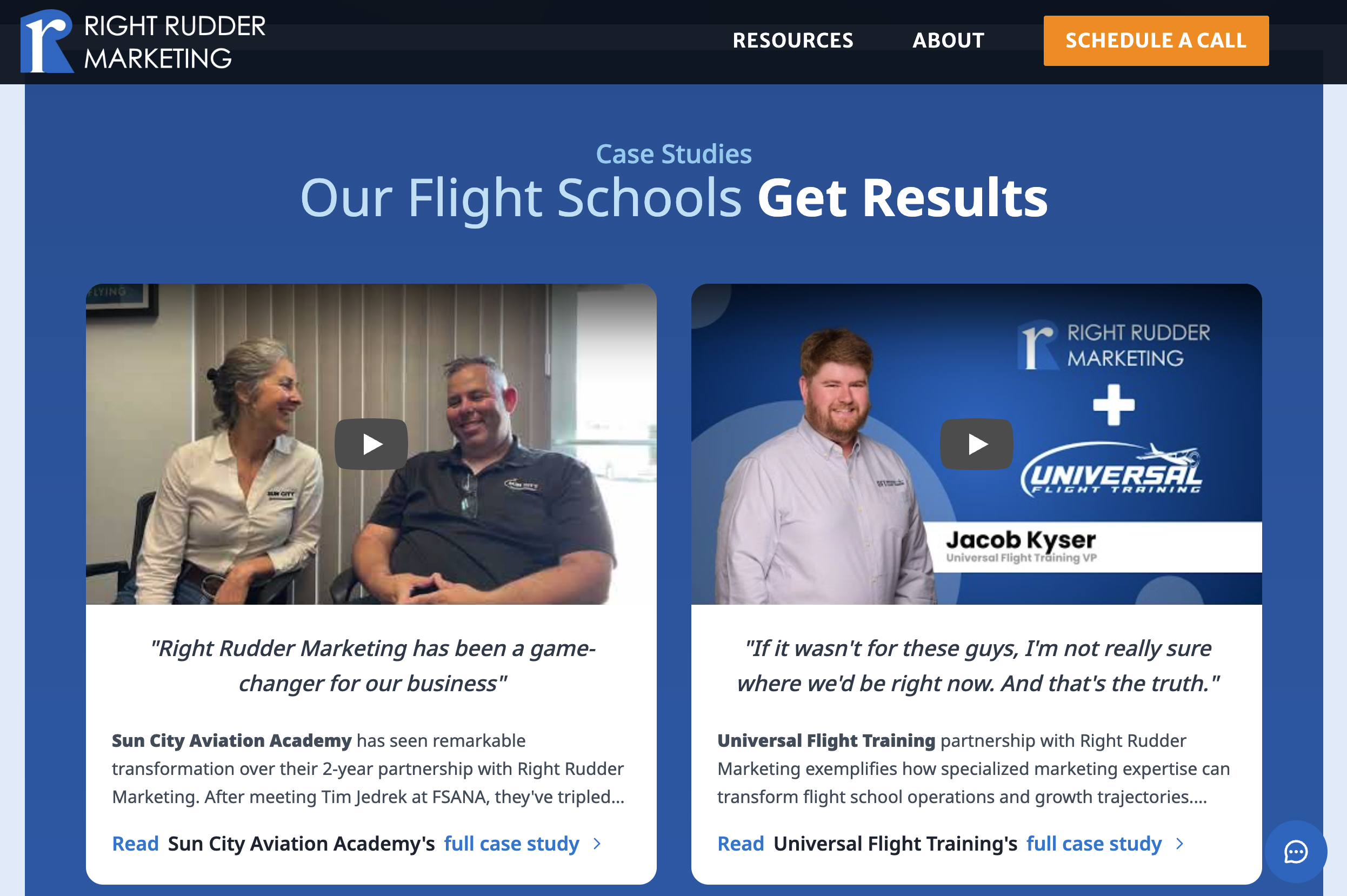 Screenshot of the RRM Website section for case studies and testimonials. Case studies and testimonial are mandatory for building reputation and authority
Here’s how it went down for me. When I was just starting out, I leaned on my aviation background. I pitched the flight schools where I was taking lessons and renting planes. One was a college where I was doing simulator training for my instrument rating.
I gave the director of aviation my pitch, and he was all in—wanted to hire me right then and there. But, being a college, his hands were tied because they had their own marketing department.
That wasn’t a total loss, though. He invited me to the Greater St. Louis Flight Instructors Association (GSLFIA) where I met a ton of flight school owners from the St. Louis area. I followed up with calls and emails, pitching my heart out, but got crickets. No takers.
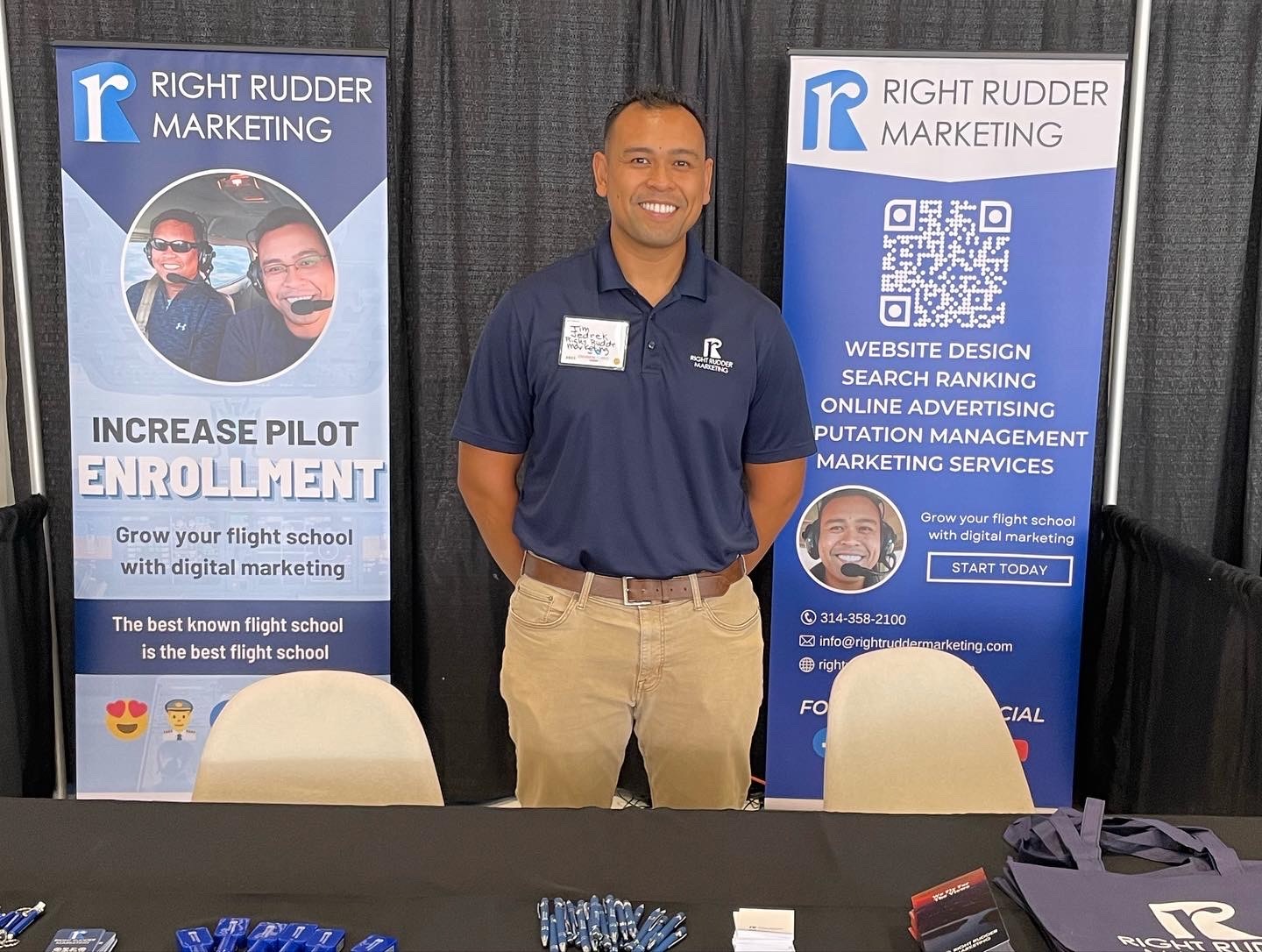
So, I tried another angle. I registered to exhibit at a trade show. The organizer sent me the attendee list, and lo and behold, there was a St. Louis flight school on it. Ideal Aviation, the same place where I’d done my discovery flight years earlier.
I sent them an email before the show, met them in person at the event, and really connected. A week later, I was in their office having a conversation. They signed on, and the rest is history. That first win gave me the case study and confidence to keep pushing, eventually building a portfolio that attracted more clients.
Eventually, as you accumulate more clients and more responsibilities, you’ll need to hire a team to handle the workload, which leads to the next phase: scaling.
Phase 2: Scaling
Once you’ve got a steady stream of clients, you realize you can’t do it all alone. You need a killer team to take your agency to the next level. That’s where Right Rudder is now. Scaling is about building systems and processes to deliver consistent results with less hands-on work from you, the owner. It’s about finding the right people and grooming them to be leaders.
The biggest challenge is balancing growth with quality. More clients mean more work, and if you’re still doing everything yourself, you’ll burn out. I’m grateful for the team at Right Rudder—they’re the ones making it happen every day. But scaling isn’t smooth sailing. I’ve seen team members and clients come and go. It’s part of the game.
One thing I’ve learned? Invest in A+ talent, even if it costs more. An A+ team member might cost 10–30% more than a B-level person, but they can deliver double the results—or more.
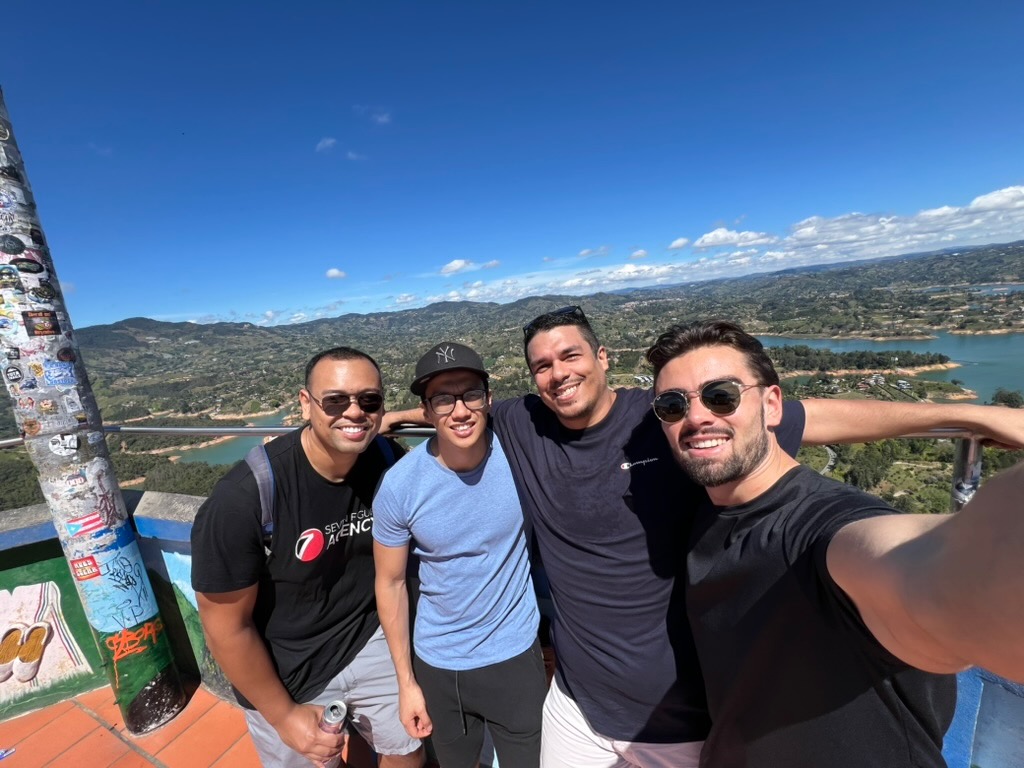
Right Rudder Marketing Team 2024. We’re overdue for a new team picture lol
Here’s the tough part though. Every investment, whether it’s a trade show, ad spend, or a new hire, comes out of your pocket as the owner. As an employee, I never understood this. Now, I feel it. It’s hard to see your personal income go to someone else or another company. But it’s an investment and a risk we take as business owners. When it pays off, we earn the bigger cut because we put our capital and income on the line.
My current struggle is finding and keeping top talent. To tackle this, we’ve built a vetting system. For vendors, we check their digital presence and reviews to ensure they’re a good fit. For employees, we do the same. We lean on referrals from current team members—hiring someone they vouch for beats a random applicant any day.
At Right Rudder, candidates have to record a video and answer specific questions before we even consider an interview. It weeds out the B-players fast.
Right now, we’re a team of seven, looking to add two more. Finding the best people and training them to be future leaders is our biggest bottleneck. I don’t have all the answers yet, but I’ll keep you posted as we navigate this phase.
Phase 3: Significance
At this stage, you’re pulling in $80k+ in monthly recurring revenue, running a seven-figure agency. Right Rudder isn’t there yet, but I’ve talked to folks who are. It’s less about grinding out marketing campaigns and more about becoming a thought leader. You’re speaking at trade shows, sitting on industry boards, and shaping how your niche does business.
For Right Rudder, this means becoming the go to marketing partner for aviation businesses. I want us to help flight schools pack their hangars with students. It’s about creating content—like blogs, webinars, or videos—that inspires the aviation community and makes flying more accessible. It’s also about building connections, joining forces with industry players, and making a real impact.
This phase is about legacy. It’s not just about revenue—it’s about leaving a mark on the industry you love.
Was It Worth It?
Hell yeah, it’s been worth it. Five years ago, I was stuck in a factory office, miserable and unfulfilled. I knew I could do more. Starting Right Rudder Marketing let me meet incredible people, fly across the country, and even hop in the cockpit of planes I’d never have touched otherwise.
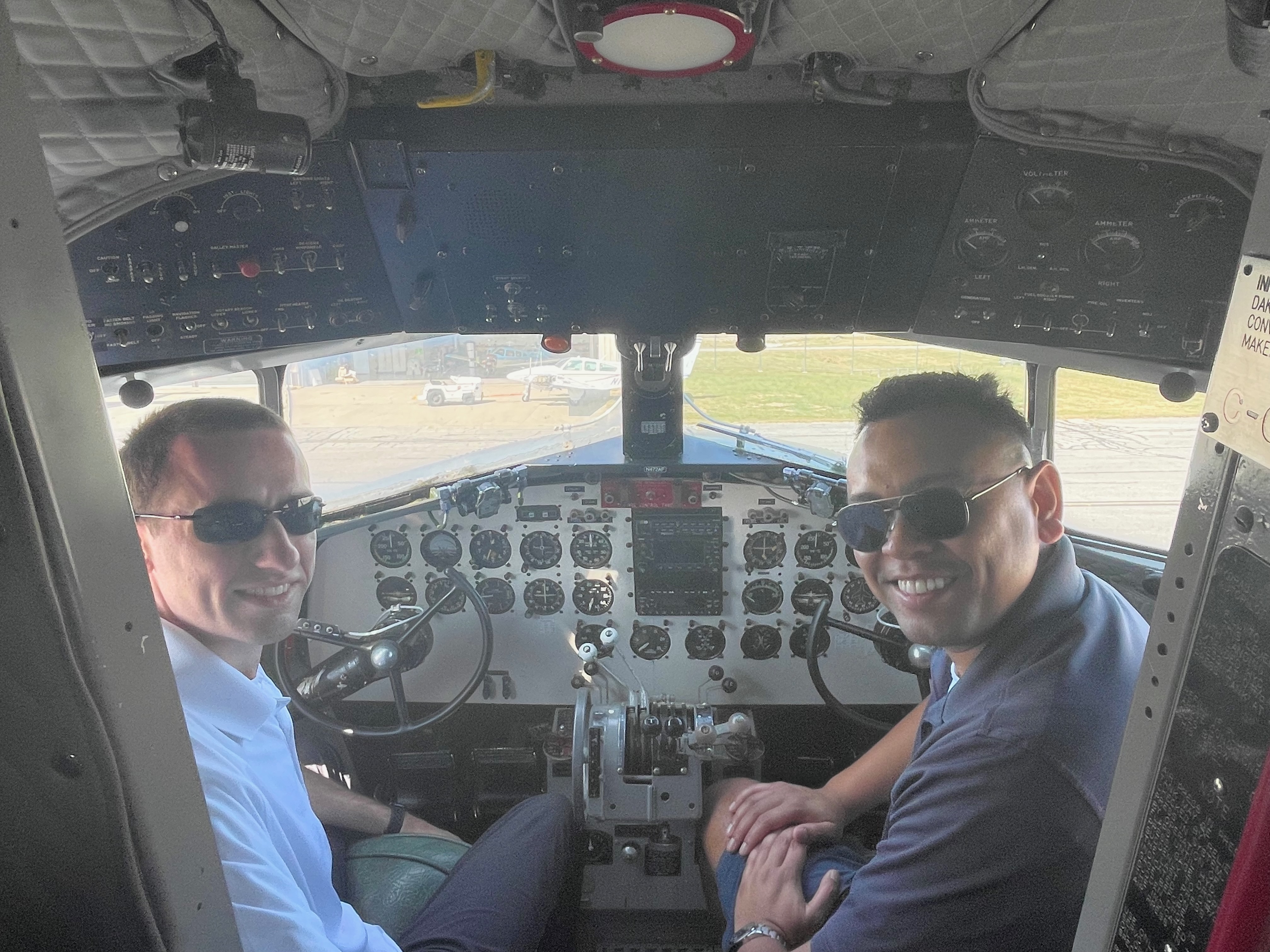 Me with one of my team members inside the cockpit of a C-47 Douglas Skytrain
But it’s not all blue skies. The tax man, difficult clients, and team drama are real. Cash flow stress keeps you up at night. Still, I wouldn’t trade it. Knowing what I know now, I’d make the same decisions again.
If you’re thinking about starting a marketing agency, you need a good head on your shoulders and the guts to step out of your comfort zone. Connect with new people, find your niche, and commit to the grind. It’s not easy, but anyone can do it with the right mindset.
Wanna talk about starting your own agency? Shoot me a message. I’d love to swap stories and share what I’ve learned.
Cheers,
-Tim